
Your New Friend, the Madagascar Hissing Cockroach!

By Zachary Lahana
Psst…down here!
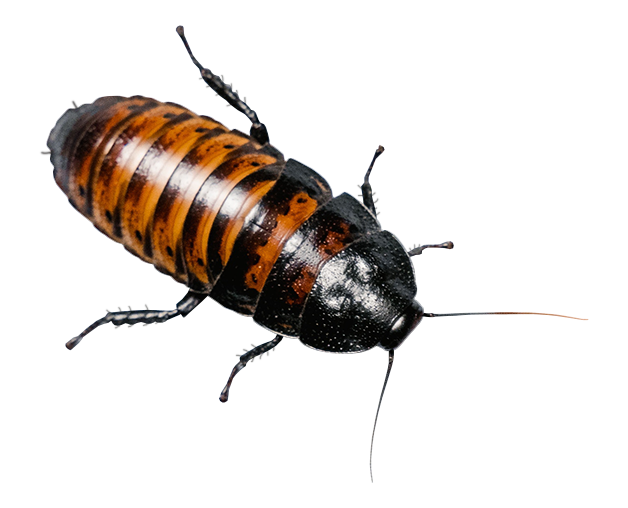
It’s so nice to meet you! I’m a Madagascar Hissing Cockroach (Gromphadorhina portentosa), and I’d like to become your new pet! Lots of people are scared of me, and I may not be the cutest or cuddliest pet, but if you give me a chance I’m sure you’ll see that we can be great friends! Before we get started, we need to learn a bit more about me and what I need to be happy in my home!
First, let’s learn a little more about me!
In the wild, I can only be found in one place, the island of Madagascar! Madagascar is a large island off the coast of Africa. A lot of animals live there, such as lemurs! Like me, they’re only found on our island in the wild.


On my island, I tend to live on the floor of the rainforest, where I can hide from predators in logs and find food that falls to the floor.
Like my name says, I can hiss! Animals such as cats can also hiss, but I do it a little differently, as I make the sound by forcing air out of tiny holes on my sides called spiracles. I use those holes to breathe as well! The hissing sound helps scare away predators, but I cannot bite, scratch or sting!
Like with humans, males and females of my species look different from each other! The easiest way to tell is by looking at a male’s head, as it will have what looks like little horns sticking out!

It’s important to know if you’re keeping boys, girls, or both, because a boy and a girl together can have babies! Like people, we don’t lay eggs, but carry our babies on the inside!
I am an insect, which means I have 6 legs, antennae, and a head, thorax, and abdomen! There are millions of species of us around the world!
Now that we know each other a little better, let’s talk about what I need to be happy in my home!
Let’s start with what my house should look like!
If you want just one or two of us to be your friend, we don’t need a huge house, but having more of us or letting us have babies will require a bigger house!

We’re found on the forest floor, where the shade from the trees keeps the temperatures cooler but the humidity is a little higher! We’re happy on our own at room temperature, but higher temperatures will make us want to have babies! To keep us nice and humid, spray us with clean water every day.
The forest floor in Madagascar is filled with soil, wood, and leaves, and that’s how we like our houses to look! Giving us a layer of soil and leaf litter with lots of wood and logs to hide under will make us the most happy!
Finally, we like to have a clean place to eat and drink, so providing a food and water bowl will make our habitat just right!
Now, what do we want to eat…?
Feeding us is not too different from feeding yourself! We are opportunistic scavengers, eating whatever we can find on the forest floor. As a result, we like to have access to fruits, vegetables, and protein!
We love to eat most of the fruits and vegetables you keep in your house, so making sure we have fresh things daily will keep us very happy! We also like to have a source of protein, something nutritious that comes from animals. There are a lot of different items you can buy from pet stores to accomplish this, but one of the easiest ways to provide protein is with flake food sold for fish!
If you don’t want to worry about picking the perfect diet for us, a lot of people will sell premade diets just for us! Pay attention to the ingredients of these however, as some contain copper, a metal that can make us sick!


I think we’re almost ready to meet, but let’s just go over a few more things!

We won’t look the same throughout our life, as we grow into different stages known as instars. We’ll get bigger and bigger until we become adults, known as an imago.
As we grow, we’ll every so often undergo a process known as molting. During this stage we will slow down and hide as we take off our old skin (our exoskeleton), and grow into our new one! We will turn a whitish color as our new skin hardens.

We need access to clean water daily. Many people try to give us sponges to drink from, but it’s safest for us to drink from a shallow bowl of water in our tank.
While we cannot bite or sting, some people are known to get a slight allergic reaction to holding us! While the reaction is pretty mild, it can make you feel itchy and red after touching us. If you experience a reaction, it’s best to either avoid holding us, or use gloves when you want or need to.
Be gentle while holding us! We’re sturdy bugs, but people are a lot bigger and stronger than us, so rough handling can get us hurt.
Thank you so much for learning about me and what I need to be happy! Don’t be afraid to ask a grownup for help if you need, as caring for a pet is a lot of work and can be hard at times! I hope you can look past what makes me scary to see an interesting and gentle creature, and I hope someday we can be friends!

Glossary
Abdomen: The rear section of an animal’s body.
Arthropod: A type of invertebrate that is defined by a hard exoskeleton and several legs.
Cockroach: A flat-bodied insect found all over the world, closely related to mantises and termites.
Copper: A common type of metal used in coins and jewelry, but is toxic to arthropods.
Exoskeleton: The external covering of an insect that provides its shape and structure, similar to how bones function in humans.
Habitat: The environment that a living thing lives in.
Humidity: The amount of water vapor or moisture present in the air.
Imago: The adult stage of an insect, where it will no longer molt and often will form its wings.
Insect: A small arthropod with 6 legs, 3 body segments, and often wings and antennae.
Instar: A stage in an insect’s life, typically defined by the time of molting.
Invertebrate: Any animal that lacks a spine and internal skeleton.
Lemur: A small, catlike primate found only on the island of Madagascar.
Madagascar Hissing Cockroach: A large, wingless species of cockroach native to Madagascar.
Molting: A process in which an arthropod will outgrow and shed its exoskeleton, and allow for a new one to set in and harden.
Opportunistic: In regards to diet, an animal who will eat any food they can easily access.
Protein: A nutrient in food necessary for survival, typically found in animal matter.
Scavenger: An animal that feeds on decaying or rotting material.
Species: A specific type of living thing.
Spiracle: A small hole on the sides of insects used for breathing.
Thorax: The middle section of an animal’s body.
 Han and Friends